
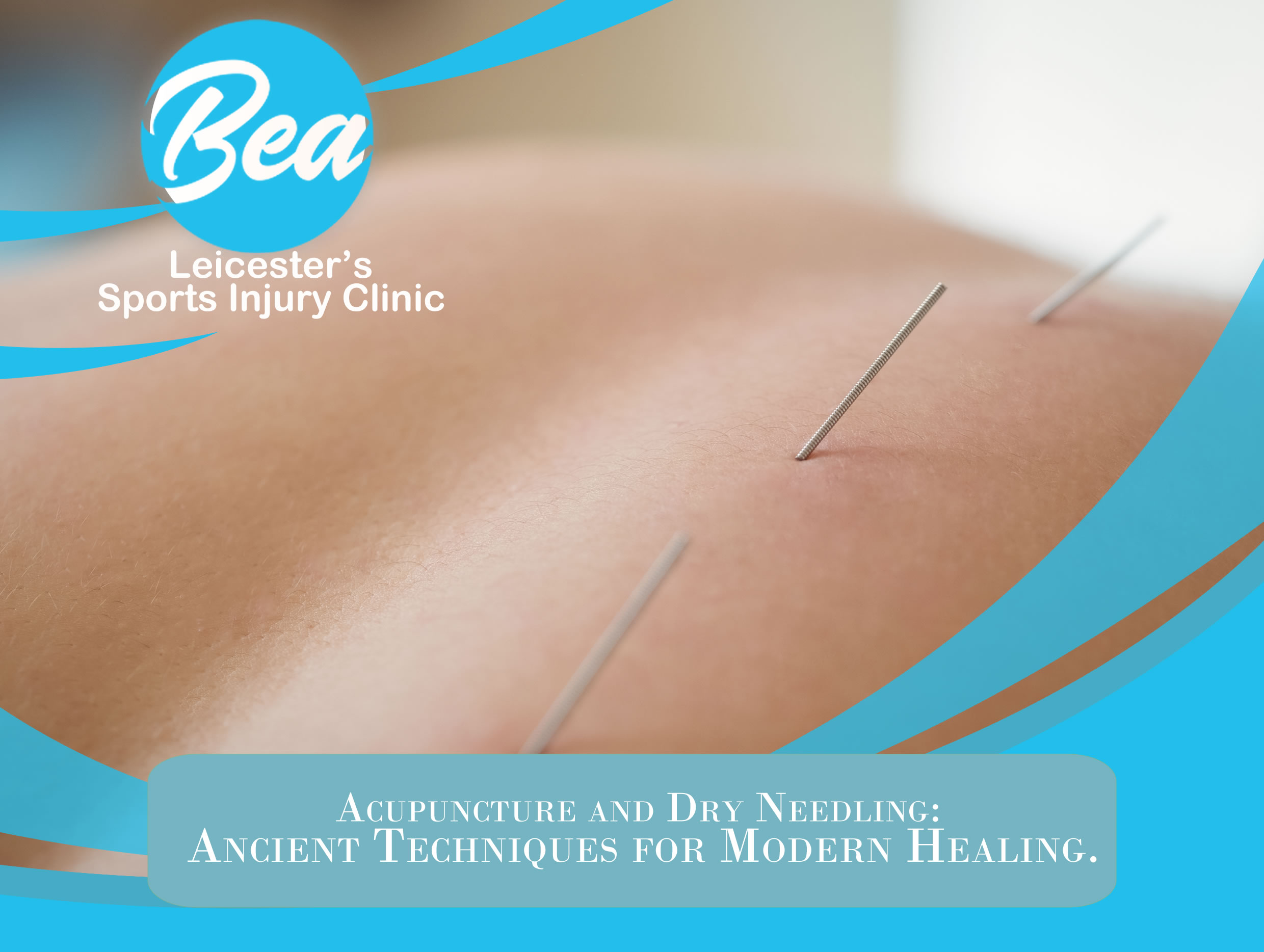
This week Bea Sports Injury Clinic, we delve into acupuncture and dry needling – two powerful techniques that have been proven effective in treating sports injuries and a wide range of conditions. Join us as we explore the origins of these practices, their benefits, and how they can help you achieve optimal wellness.
The Ancient Art of Acupuncture
For over two thousand years, traditional Chinese medicine has embraced acupuncture as a holistic healing modality. Central to this practice is the belief that energy, or Qi, flows through the body along specific pathways called meridians. When these energy channels become blocked, illnesses and injuries can arise. By inserting ultra-fine needles into these blocked meridians, acupuncturists aim to stimulate the body’s natural healing response and restore its balance.
Beyond energy flow restoration, acupuncture also enhances blood circulation, a crucial factor in tissue repair. Tailored combinations of acupuncture points are used to address various conditions, with the ultimate goal of promoting overall well-being.
The Emergence of Dry Needling
In recent times, dry needling, also known as medical acupuncture, has gained widespread recognition and acceptance worldwide. This technique, commonly employed in physical therapy, focuses on treating muscle dysfunction by targeting trigger points, commonly known as “knots.”
Trigger points often result from muscle injuries, such as sports-related strains or repetitive stress. By carefully inserting fine needles into these trigger points, therapists aim to alleviate pain and discomfort, even in areas seemingly unrelated to the point of insertion.
A Confluence of Healing
The driving force behind both acupuncture and dry needling is the shared objective of reducing pain, enhancing mobility, and restoring functionality. By targeting tight, painful muscles, these techniques can yield remarkable results. Recent research has illuminated the science behind these ancient practices, revealing that needle insertion triggers the release of pain-relieving substances, like endorphins, acting as the body’s natural analgesics. Moreover, these methods promote increased blood flow and reduced muscle tightness, fostering an ideal environment for healing.
Conditions Treated
The scope of acupuncture and dry needling’s efficacy extends across a wide range of sports and work-related injuries. Here are some examples of conditions that can benefit from these therapies:
- Lower back pain
- Plantar fasciitis
- Joint pain
- Tendonitis
- Muscle cramps
- Headaches/Migraines
- Computer-related disorders
- Shoulder/neck pain
- Sciatic pain
The Art of Healing – Acupuncture vs. Dry Needling
While both acupuncture and dry needling employ needles to promote healing, they have distinct focuses and applications. Acupuncture centers on the insertion of needles into specific acupuncture points along meridians to restore energy flow and promote overall wellness. In a single session, multiple points throughout the body can be treated to address various concerns.
On the other hand, dry needling zeroes in on individual muscles and their trigger points. By targeting these specific areas, therapists can alleviate pain, release muscle tension, and restore functional movement. Dry needling often complements sports massage, serving as an effective tool to manage pain and treat various injuries.
Discover the Power of Acupuncture and Dry Needling
At Bea Sports Injury Clinic, we are passionate about harnessing the wisdom of practices like acupuncture and the modern efficacy of dry needling to help our clients achieve their wellness goals. Whether you seek relief from sports injuries, chronic pain, or a path to overall well-being, our skilled therapists are here to guide you on your healing journey.
We are here to help. Reach out to us today to schedule your session and embark on a path towards optimal health and vitality.