
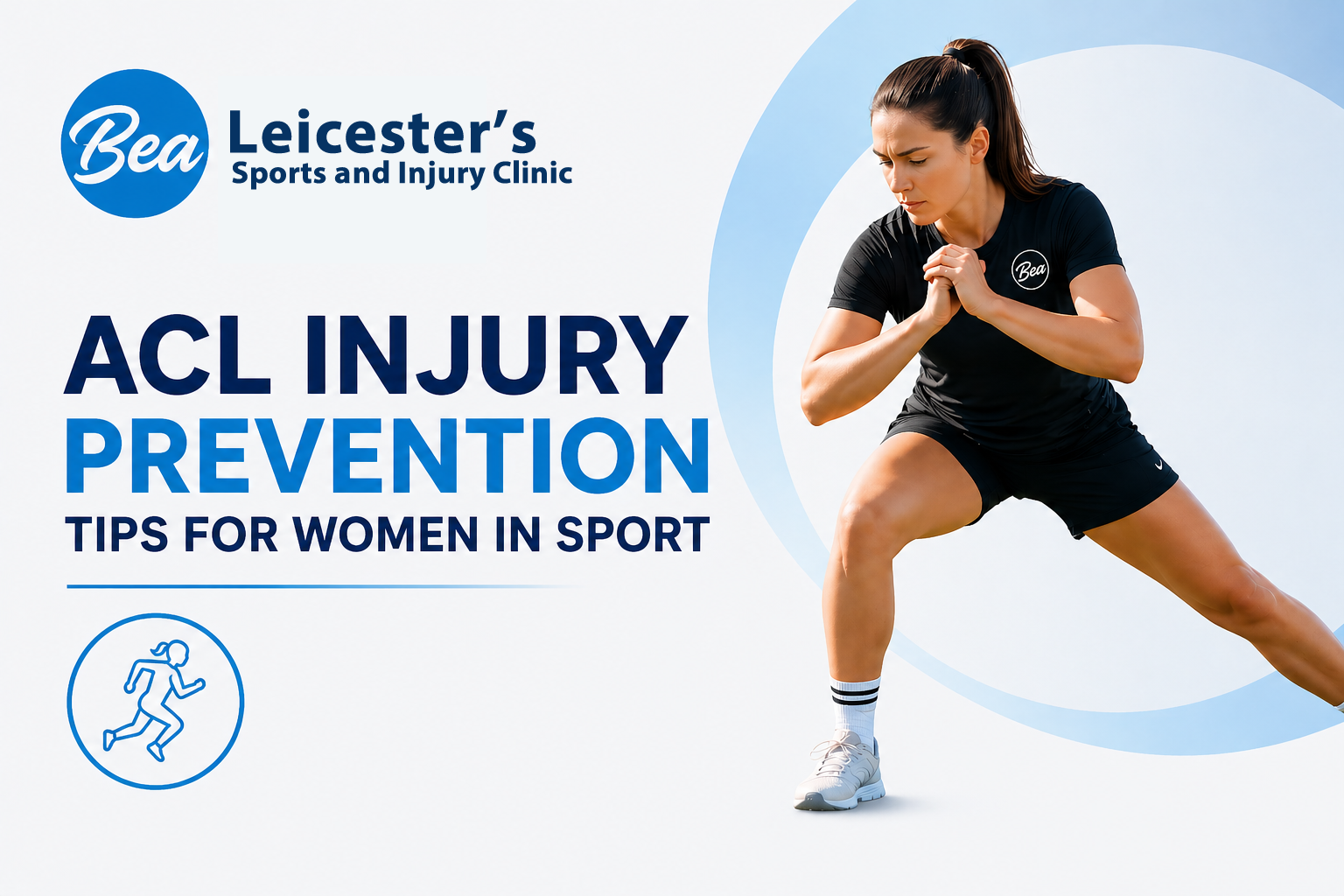
Anterior Cruciate Ligament (ACL) injuries are among the most serious and frustrating setbacks for active women in sport. Whether you play football, netball, rugby, basketball, or enjoy regular fitness training, ACL injuries can significantly impact performance, confidence, and long-term joint health.
Research shows that women are at a higher risk of ACL injuries due to a combination of anatomical, hormonal, and biomechanical factors. The good news is that targeted prevention strategies can dramatically reduce this risk.
Here’s how women in sport can protect their knees, improve performance, and stay game-ready.
Why Are Women More Prone to ACL Injuries?
Several factors may increase ACL injury risk in female athletes:
Common contributors:
- Wider pelvis structure affecting knee alignment
- Greater knee valgus (inward knee movement)
- Hormonal fluctuations impacting ligament laxity
- Reduced hamstring strength relative to quadriceps
- Poor landing mechanics
- Muscle imbalances and reduced core stability
These factors can place greater strain on the knee during jumping, pivoting, sudden stops, or directional changes.
Top ACL Injury Prevention Tips
1. Strengthen the Hamstrings and Glutes
Strong posterior chain muscles help stabilise the knee and reduce excessive strain on the ACL.
Key exercises:
- Romanian deadlifts
- Hamstring curls
- Glute bridges
- Bulgarian split squats
- Resistance band lateral walks
Why it matters:
Better muscle support reduces knee instability and improves movement efficiency.
2. Improve Landing and Jump Mechanics
Incorrect landing technique is one of the biggest contributors to ACL injuries.
Focus on:
- Soft, controlled landings
- Knees aligned over toes
- Avoiding inward knee collapse
- Balanced weight distribution
Helpful drills:
- Box jumps with form control
- Drop jumps
- Single-leg landing practice
- Agility ladder drills
3. Build Core Stability
A strong core supports better movement patterns throughout the body.
Effective exercises:
- Planks
- Dead bugs
- Pallof press
- Side planks
- Stability ball work
Benefits:
- Improved balance
- Better posture
- Reduced lower limb compensation
4. Prioritise Neuromuscular Training
Neuromuscular training improves body awareness, reaction time, and movement efficiency.
Include:
- Balance exercises
- Single-leg stability work
- Directional change drills
- Plyometric control
- Sport-specific movement patterns
This type of training has been shown to significantly reduce ACL injury rates.
5. Maintain Flexibility and Mobility
Tight muscles can alter movement mechanics and increase joint stress.
Important areas:
- Hip flexors
- Hamstrings
- Calves
- Quadriceps
- Ankle mobility
Recommended methods:
- Dynamic warm-ups
- Sports massage
- Foam rolling
- Mobility drills
6. Never Skip Proper Warm-Ups
Warm-ups prepare the body for explosive movement and improve joint readiness.
A good warm-up should include:
- Dynamic stretching
- Activation drills
- Light cardio
- Movement rehearsal
Programmes like FIFA 11+ have shown excellent results for reducing lower limb injuries.
7. Address Fatigue and Recovery
Fatigue can increase poor movement patterns and injury risk.
Prioritise:
- Rest days
- Quality sleep
- Nutrition
- Hydration
- Recovery treatments like sports massage
Training harder is not always better — smart recovery is essential.
Warning Signs to Watch For
Seek professional assessment if you experience:
- Knee instability
- Pain during pivoting or jumping
- Repeated knee discomfort
- Swelling after training
- Reduced confidence in movement
Early intervention can prevent minor issues becoming serious injuries.
How Bea Sports Clinic Can Help
At Bea Sports Clinic, we support female athletes with:
- Injury prevention screening
- Sports massage therapy
- Strength and conditioning guidance
- Movement analysis
- Rehabilitation support
- Recovery planning
Our personalised approach helps women stay strong, resilient, and performing at their best.
Final Thoughts
ACL injuries can be life-changing, but proactive prevention can dramatically lower your risk.
By improving strength, mechanics, mobility, and recovery, women in sport can protect their knees while enhancing athletic performance.
If you’re serious about injury prevention, Bea Sports Clinic is here to help you stay powerful, confident, and game-ready.
Want to improve your performance and reduce injury risk?
Book an assessment with Bea Sports Clinic today and take control of your athletic future.