
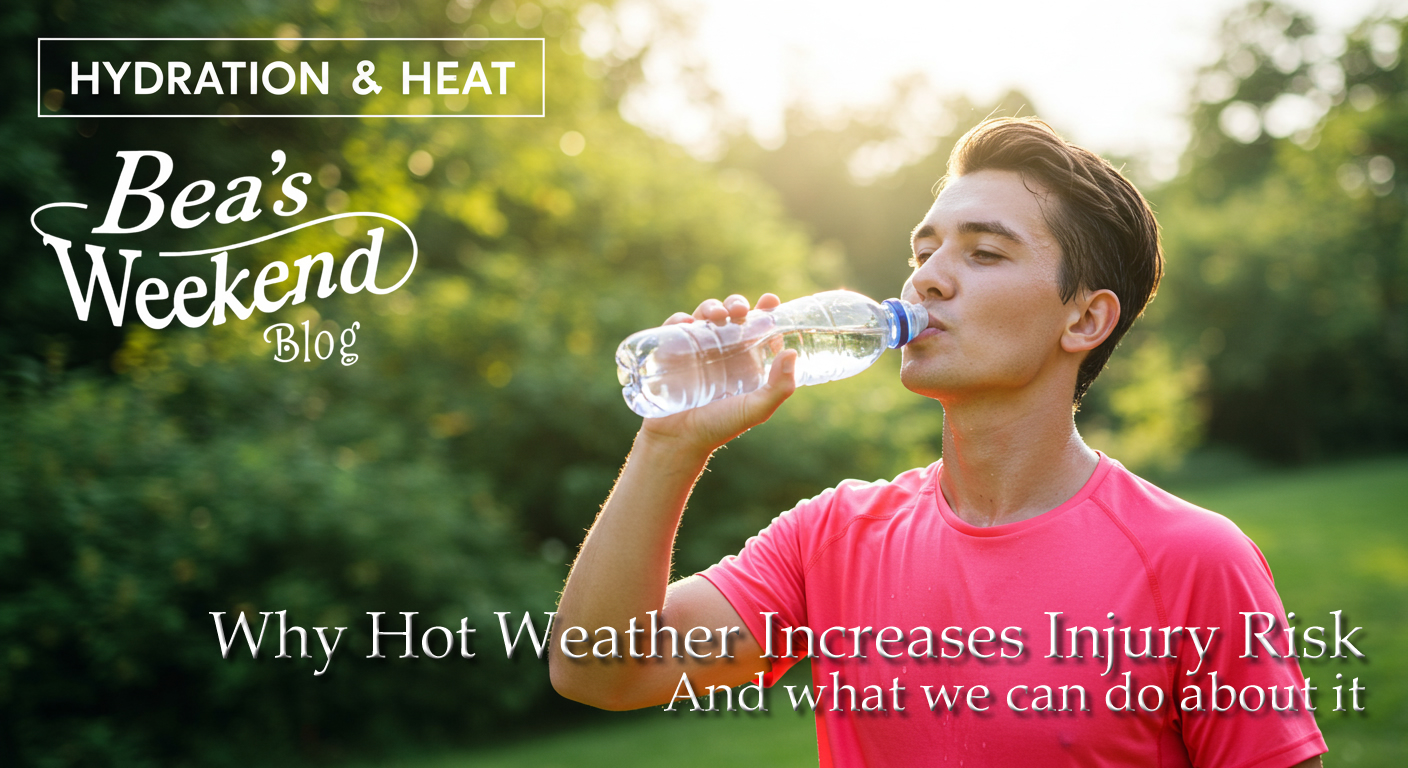
💧 The Summer Injury Risk No One Talks About
When it comes to staying injury-free, we tend to focus on stretching, technique, and posture, and rightly so. But there’s another, often overlooked factor that plays a massive role in keeping your body moving well during the warmer months: hydration.
At Bea Sports Injury Clinic, we’ve noticed a trend: as the temperature rises, so do complaints of cramps, fatigue, headaches, and even flare-ups of old injuries. And more often than not, dehydration plays a part.
Let’s break down why staying properly hydrated is one of the most underrated ways to protect your muscles and joints this summer.
🔥 Why Hot Weather Increases Injury Risk
When your body is exposed to heat—whether during a run, a workout, or even a day of gardening—it has to work harder to regulate its core temperature. That usually means more sweating, which leads to loss of water and electrolytes.
The result?
-
Reduced muscle function
-
Decreased joint lubrication
-
Slower reaction times
-
Fatigue setting in faster
All of this adds up to a higher risk of strains, sprains, cramps, and even dizziness or heat-related illness. And if you’re already managing an old injury, dehydration can reduce your body’s ability to support and stabilise that area effectively.
💡 Did You Know?
-
A 2% drop in hydration can cause up to a 10% drop in physical performance.
-
Muscles are over 70% water—and they need proper hydration to contract efficiently.
-
Ligaments and cartilage rely on hydration to stay supple and reduce friction in joints.
✅ Practical Tips to Stay Hydrated and Injury-Free
1. Drink Water Consistently – Not Just When You’re Thirsty
Many people wait until they feel thirsty to grab a drink, but thirst is actually a late sign of dehydration. Your body performs best when it’s consistently topped up with fluids throughout the day. Try keeping a refillable water bottle with you at work, in the car, or out in the garden. Even small sips regularly can make a big difference, especially in hot weather or if you’re recovering from an injury.
2. Include Electrolytes If You’re Sweating A Lot
Sweating isn’t just about losing water. It also flushes out essential minerals like sodium, potassium, magnesium, and calcium. These minerals (known as electrolytes) help muscles contract and nerves fire properly. If you’re doing intense activity, working outdoors, or sweating heavily, plain water may not be enough. A low-sugar sports drink, electrolyte tablets, or even a pinch of sea salt in your water can help replace lost salts and prevent cramps, fatigue, and even dizziness.
3. Watch the Colour of Your Urine
It might sound a bit odd, but checking the colour of your urine is one of the easiest ways to assess hydration. Aim for a pale yellow or straw colour. This usually means you’re hydrated. Dark yellow or amber? That’s your cue to start sipping. This is particularly helpful for people who don’t always recognise when they’re getting dehydrated, especially older adults or those on certain medications.
4. Hydrate Around Exercise
Hydration before, during, and after activity is crucial for performance and injury prevention. 30–60 minutes before exercise, aim to drink 300–500ml of water. During longer or high-intensity sessions, take small sips regularly to avoid dehydration sneaking up on you. Afterward, make sure to replenish what you’ve lost, especially if your session involved sweating or was out in the sun. This helps reduce muscle soreness, prevent cramping, and support faster recovery.
5. Eat Hydrating Foods
Don’t just drink your water – eat it too! Fresh fruits and vegetables are a great way to boost hydration levels naturally. Foods like cucumber, watermelon, strawberries, oranges, tomatoes, and lettuce are packed with water and nutrients that support overall health. They also offer antioxidants and vitamins that help your body recover from physical stress and keep your joints and muscles in top shape.
Already Feeling the Effects?
If you’re noticing:
-
Muscle cramps or spasms
-
Fatigue faster than usual
-
Joint stiffness or pain after exercise
-
Light-headedness after time in the sun
…your body may be crying out for better hydration or it could be an early sign of an injury. Don’t ignore it.
At Bea Sports Injury Clinic, we can help you recover quickly and get expert advice tailored to your activity level, lifestyle, and goals.
💬 Book a Check-In, Stay Safe This Summer
Whether you’re training hard, working outdoors, or just enjoying more time in the sunshine, hydration matters more than you might think.
👉 Book your summer assessment today at Bea Sports Injury Clinic and keep your body moving safely, no matter the temperature.